
Consumer study: What consumers expect from a fibre-based reusable shopping bag
Insights from a Finnish supermarket study
Key findings at a glance:
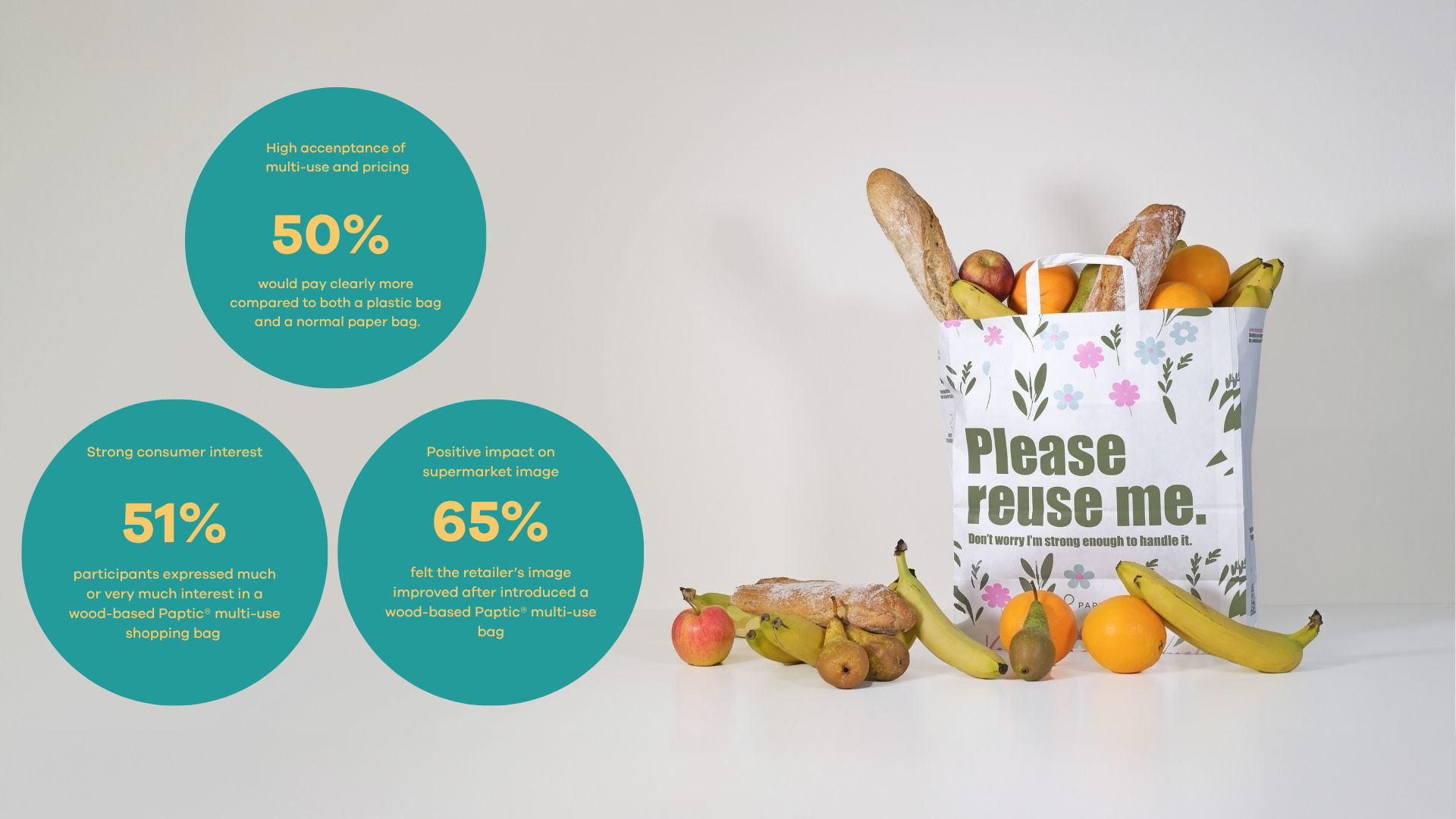
Positive impact on supermarket image: 65% felt the supermarket’s image improved after introducing a wood‑based reusable bag.
Strong consumer interest: 51% of participants expressed much or very much interest in a wood‑based Paptic® reusable shopping bag.
High acceptance of reuse and pricing: 50% would pay the same price or more than for a plastic bag, and reusability and durability were ranked as the most important features.
Open summary of the study (PDF).
Consumer expectations are shifting towards durability and responsibility
As retailers and brands look for ways to reduce plastic use, understanding consumer expectations is critical. To gain deeper insight into how shoppers perceive reusable, wood‑based alternatives, Sense N Insight conducted a consumer interview study for Paptic in Finnish supermarkets during late 2025.
The study explored consumers’ attitudes towards wood‑based, reusable shopping bag, made of Paptic®, as well as its perceived impact on the supermarket’s sustainability image.
The results point to a clear trend: consumers are not only open to reusable alternatives, but they also actively expect them to perform well in everyday use.
Durability and reusability matter most
When asked which features are most important in a shopping bag, respondents ranked durability, easiness to reuse, moisture resistance, and environmental responsibility highest.
The wood‑based Paptic® multi‑use bag was widely described as:
- Environmental responsibility
- durable in use
- versatile for multiple purposes beyond grocery shopping
Many participants highlighted the practical benefits of a bag that is strong, reusable, and easy to store, noting that foldability made it suitable for repeated everyday use.
Consumers are willing to pay for better alternatives
Price acceptance was notably strong.
- 89% of respondents said they would pay the same price or more than for a plastic bag.
These findings indicate that when a reusable bag offers clear functional and environmental value, consumers do not see price as a barrier.
Reusable bags can strengthen a retailer’s sustainability image
Beyond functionality, the study also examined how the introduction of a wood‑based Paptic® reusable bag affects perceptions of the supermarket.
- 65% of respondents felt the supermarket’s image improved.
- The change was seen as a positive and responsible step, reinforcing the retailer’s commitment to sustainability.
Consumers described the bag as a visible signal of environmental responsibility and a meaningful addition to existing sustainability initiatives, even while recognizing that packaging is only one part of a broader sustainability journey.
From consumer insight to practical packaging solutions
The findings highlight an important takeaway for retailers and brands: consumers expect reusable bag solutions that are both responsible and reliable.
Wood‑based bags are perceived not just as an environmental alternative, but as a functional upgrade compared to single‑use plastic and traditional paper bags. When durability, usability, and sustainability come together, reusable bag can support both customer satisfaction and brand image.
At Paptic, we continue to develop fibre‑based materials that respond to these expectations and helping brands replace plastic or other conventional materials with solutions designed for real‑world use.
The study was conducted by Sense N Insight.
Got interested? Open summary of the study.
For more information, please contact us via the Contact page.